Task Types
IELTS Formal Letter: Structure, Language and Model Answer for General Training Task 1
Learn how to write a high-scoring IELTS formal letter for General Training Task 1. This guide covers structure, formal language, a model answer, and examiner tips for complaint, request, and application letters.
Pandawise AI · Updated · 10 min read
In this guide
- 1What Is an IELTS Formal Letter Task?
- 2A Sample IELTS Formal Letter Question
- 3How to Plan and Structure Your IELTS Formal Letter
- 4Useful Language for an IELTS Formal Letter
- 5IELTS Formal Letter Model Answer
- 6Why This Model Answer Works
- 7Common Mistakes That Lower Your Band
- 8How to Practise and Key Takeaways
Writing a formal letter in English is a skill that many IELTS candidates find challenging, yet it is essential for General Training Task 1. An IELTS formal letter requires a specific tone, clear structure and polite language. In this guide, you will learn exactly what the task involves, how to plan and structure your answer, which formal expressions to use, and what common mistakes to avoid. You will also study a complete IELTS formal letter model answer and understand why it would score highly.
What Is an IELTS Formal Letter Task?
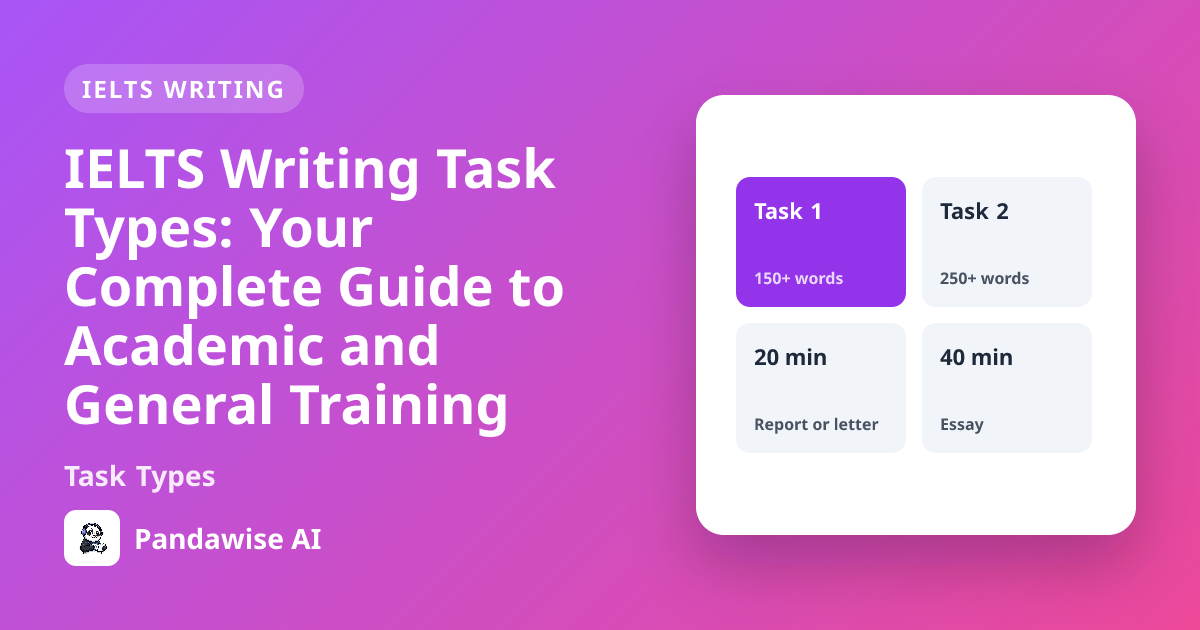
In the General Training module of the IELTS Writing test, Task 1 is always a letter. The test lasts 60 minutes in total, and you should spend about 20 minutes on Task 1 and 40 minutes on Task 2. Task 1 requires at least 150 words, while Task 2 requires at least 250 words. Remember that Task 2 counts twice as much as Task 1, so managing your time well is crucial.
A formal letter IELTS General Training task asks you to write to a company, an organisation or an official whom you do not know personally. Common situations include:
- a complaint letter IELTS (e.g., about a faulty product or poor service)
- a letter of request (e.g., asking for information about a course)
- an application letter (e.g., for a job or a volunteer position)
- an enquiry letter (e.g., about accommodation or travel arrangements)
The prompt gives you a brief situation and three bullet points that you must cover. Your letter must address all three points in a clear and logical order, using a consistently formal tone.
What the Examiner Expects
Your letter is assessed on four criteria, each worth 25% of your Task 1 score:
- Task Achievement: You fully cover all three bullet points, maintain a suitable formal tone throughout, and write at least 150 words.
- Coherence and Cohesion: Your letter is well organised into paragraphs, ideas flow logically, and you use linking words appropriately without overusing them.
- Lexical Resource: You use a range of vocabulary suitable for formal writing, with accurate spelling and word choice.
- Grammatical Range and Accuracy: You use a mix of sentence structures and verb tenses with good control, and you avoid contractions and informal grammar.
Examiners penalise memorised or template-heavy answers. Your letter must be a genuine response to the specific situation and bullet points.
A Sample IELTS Formal Letter Question
Below is a typical IELTS formal letter task. It asks you to write a complaint letter, which is one of the most common types.
You recently stayed at a hotel and were unhappy with the service you received.
Write a letter to the hotel manager. In your letter:
- explain the reason for your stay
- describe the problems you encountered
- say what action you would like the manager to take
This prompt is clear: the recipient is the hotel manager (someone you do not know), the tone must be formal, and you must cover all three bullet points.
How to Plan and Structure Your IELTS Formal Letter
Spend the first three to four minutes planning before you start writing. A clear plan helps you address all the bullet points, stay on topic and write faster.
Step-by-Step Planning
- Identify the recipient and tone: The manager is a stranger, so use ‘Dear Sir or Madam,’ and close with ‘Yours faithfully,’ followed by your full name. If a name were given (e.g., ‘Dear Mr Smith,’), you would close with ‘Yours sincerely,’.
- List the bullet points as your main paragraphs. Each bullet point becomes the focus of one paragraph.
- Add an opening and closing paragraph: The opening states your purpose clearly. The closing politely restates what you expect.
- Jot down key vocabulary: Think of formal words and phrases you can use (e.g., ‘dissatisfied’, ‘inconvenience’, ‘I would be grateful if…’).
Paragraph-by-Paragraph Plan
| Paragraph | Purpose | What to Include |
|---|---|---|
| Opening | State the purpose of your letter. | A clear sentence that tells the reader why you are writing. For a complaint, mention the stay and your dissatisfaction. |
| Body 1 | Cover the first bullet point. | Explain the reason for your stay (e.g., a business trip, a family holiday). Include relevant details such as dates. |
| Body 2 | Cover the second bullet point. | Describe the problems you encountered. Be specific but polite. Use formal vocabulary like ‘unacceptable’, ‘inadequate’, ‘not up to standard’. |
| Body 3 | Cover the third bullet point. | Say what action you expect. Use polite request structures: ‘I would appreciate it if…’, ‘I request that…’. |
| Closing | End politely and signal the end of the letter. | A sentence that looks forward to a reply or action, followed by ‘Yours faithfully,’ and your full name. |
This structure works for any formal letter IELTS General Training task, whether it is a complaint, request or application. Simply adjust the content of each body paragraph to match the bullet points.
Useful Language for an IELTS Formal Letter
The vocabulary and grammar you choose make the difference between a letter that sounds informal and one that is appropriately formal. Below are grouped phrases that you can adapt naturally to your own letter. Avoid copying whole sentences as templates; instead, combine these phrases with your own ideas.
Opening Phrases
- I am writing to express my dissatisfaction with…
- I am writing to bring to your attention…
- I am writing to request information about…
- I am writing to apply for the position of…
Stating the Purpose
- The reason I am writing is that…
- I would like to draw your attention to…
- I wish to make a formal complaint regarding…
Describing Problems (Complaint Letters)
- The service I received was far below the standard I expected.
- The room was not cleaned to an acceptable level.
- The noise from the construction work caused considerable disruption.
- I encountered a number of issues, including…
Making Polite Requests
- I would be grateful if you could…
- I would appreciate it if you would…
- I request that you take immediate action to…
- I suggest that you consider…
Closing Phrases
- I look forward to receiving your response.
- I trust that you will deal with this matter promptly.
- Thank you for your attention to this matter.
- I hope to hear from you at your earliest convenience.
Formal Language Features
- No contractions: Use ‘I am’ not ‘I’m’, ‘do not’ not ‘don’t’.
- Polite modals: ‘would’, ‘could’, ‘may’ instead of ‘can’, ‘will’.
- Full forms: ‘I would like’ not ‘I’d like’.
- Formal linkers: ‘Furthermore’, ‘Moreover’, ‘In addition’, ‘However’, ‘Therefore’.
- Passive structures: ‘I was given the wrong key’ rather than ‘They gave me the wrong key’ (keeps the focus on the problem, not the person).
IELTS Formal Letter Model Answer
Here is a high-scoring answer to the sample question above. It follows the plan, uses formal language and covers all three bullet points.
Dear Sir or Madam,
I am writing to express my dissatisfaction with the service I received during my recent stay at your hotel.
I stayed at the hotel from 10th to 12th March for a business conference that was held nearby. I had booked a single room with a work desk, as I needed a quiet space to prepare for my presentations.
Unfortunately, I encountered several problems that made my stay very uncomfortable. Firstly, the room I was given did not have a desk, despite my specific request. When I asked to be moved, I was told that no other rooms were available. Furthermore, the air conditioning in the room was not functioning properly, and the temperature was uncomfortably high throughout my stay. To make matters worse, the room was not cleaned on the second day, and the bathroom had not been restocked with towels.
I would be grateful if you could investigate these issues and offer me a partial refund. I believe this is a fair request given the inconvenience I experienced. I also suggest that you review your booking system to ensure that guests’ requirements are met in future.
I look forward to receiving your response and hope that you will deal with this matter promptly.
Yours faithfully, John Davies
Word count: 189
Why This Model Answer Works
Let us examine the letter against the four IELTS assessment criteria.
Task Achievement
The letter fully addresses all three bullet points. The reason for the stay is explained in the second paragraph (business conference, dates, need for a desk). The problems are described clearly in the third paragraph (no desk, faulty air conditioning, poor housekeeping). The expected action is stated in the fourth paragraph (investigation, partial refund, review of booking system). The tone is consistently formal and polite throughout, and the letter is well over 150 words.
Coherence and Cohesion
The letter is logically organised into clear paragraphs. The opening states the purpose, and each body paragraph deals with one bullet point. The closing paragraph rounds off the letter politely. Linking words such as ‘Firstly’, ‘Furthermore’ and ‘To make matters worse’ guide the reader smoothly through the problems without being overused.
Lexical Resource
The vocabulary is appropriate for a formal complaint. Phrases like ‘express my dissatisfaction’, ‘despite my specific request’, ‘not functioning properly’, ‘uncomfortably high’ and ‘partial refund’ show a good range. There is no informal or colloquial language.
Grammatical Range and Accuracy
The letter uses a mix of simple and complex sentences. There are examples of the past simple (‘I stayed’, ‘I was told’), the past perfect (‘had booked’, ‘had not been restocked’) and polite conditional structures (‘I would be grateful if you could investigate’). There are no contractions, and grammar is accurate throughout.
Common Mistakes That Lower Your Band
Avoid these frequent errors when you write your IELTS formal letter.
- Using an informal tone: Writing ‘I want you to…’ instead of ‘I would appreciate it if you could…’ immediately lowers your Task Achievement score. Keep the language polite and distant.
- Missing a bullet point: If you do not cover all three points, your Task Achievement band is limited, no matter how good your language is.
- Using contractions: Words like ‘I’m’, ‘don’t’ and ‘can’t’ are not acceptable in a formal letter. Always write the full form.
- Wrong opening and closing: Using ‘Dear Sir or Madam,’ with ‘Yours sincerely,’ (or ‘Dear Mr Smith,’ with ‘Yours faithfully,’) is a basic error that signals poor control of formal conventions. Remember: ‘Sir or Madam’ → ‘faithfully’; a name → ‘sincerely’.
- Writing a template introduction: Starting with a memorised sentence that does not match the specific situation (e.g., ‘I hope this letter finds you well’) wastes words and does not impress the examiner.
- Forgetting to state the expected action: A complaint or request letter must end with a clear statement of what you want the recipient to do. Without this, the letter feels incomplete.
- Overusing linking words: Starting every sentence with ‘Firstly’, ‘Secondly’, ‘Moreover’ makes your writing mechanical. Use a variety of cohesive devices, including reference words (‘this’, ‘these’) and natural transitions.
How to Practise and Key Takeaways
Regular, focused practice is the best way to improve your formal letter writing. Work with realistic prompts that include three bullet points, and time yourself to write a letter in 20 minutes. After writing, check your letter against the four criteria: Did you cover all the points? Is the tone formal? Is your vocabulary varied? Are your sentences accurate?
For guided practice with instant feedback, you can use IELTS Writing lessons to work on your letters and other task types.
Key Takeaways
- Spend 20 minutes on Task 1, write at least 150 words, and cover all three bullet points.
- Use ‘Dear Sir or Madam,’ with ‘Yours faithfully,’ or ‘Dear Mr/Ms [name],’ with ‘Yours sincerely,’.
- Maintain a formal tone: no contractions, polite request forms, and formal vocabulary.
- Structure your letter with a clear opening, one paragraph per bullet point, and a polite closing.
- Avoid memorised phrases; always respond naturally to the specific prompt.
- Review the IELTS General Training Writing Task 1 informal letters and IELTS General Training Writing Task 1 semi-formal letters guides to understand the differences in tone, and see the all IELTS Writing task types overview for the bigger picture.
Write it and get feedback on every criterion
Exam-style writing tasks marked by an AI examiner on all four criteria, with a band for each.
Explore the appFrequently asked questions
What is the difference between a formal and a semi-formal letter in IELTS General Training Task 1?
A formal letter is written to someone you do not know, such as a company manager or an official. You use 'Dear Sir or Madam,' and 'Yours faithfully,'. A semi-formal letter is for someone you know but not well, like a neighbour or landlord. You might use their name and a slightly warmer tone, but still avoid very casual language.
Can I use contractions in an IELTS formal letter?
No, you should not use contractions. Write 'I am' instead of 'I'm', 'do not' instead of 'don't', and 'I would' instead of 'I'd'. Full forms are a basic requirement of formal writing and using contractions will lower your score for Task Achievement and Lexical Resource.
How many words should I write for an IELTS formal letter?
The minimum is 150 words. Writing fewer words will lose you marks. A safe target is between 160 and 190 words. This gives you enough space to cover the three bullet points fully without writing so much that you run out of time or make more errors.
What happens if I forget to cover one bullet point in my IELTS formal letter?
Your Task Achievement score will be limited. The examiner checks that you have addressed all three bullet points. Missing one means you have not fully completed the task, so you cannot score higher than Band 5 for that criterion, even if your language is excellent.
Is it necessary to include an address in my IELTS formal letter?
No, you do not need to write your own address or the recipient's address. Simply start with the salutation (e.g., 'Dear Sir or Madam,') and end with the closing (e.g., 'Yours faithfully,') and your full name. Writing addresses wastes time and words.