Task Types
IELTS Informal Letter: Structure, Language and Model Answer
Learn how to write a high-scoring IELTS informal letter for General Training Task 1. Get the correct format, natural language tips and a full model answer.
Pandawise AI · Updated · 8 min read
In this guide
- 1What is the IELTS informal letter task?
- 2A sample IELTS informal letter question
- 3How to plan and structure your IELTS informal letter
- 4Useful language for an IELTS informal letter
- 5High-scoring IELTS informal letter model answer
- 6Why the model answer works
- 7Common mistakes that lower the band
- 8How to practise and key takeaways
The IELTS informal letter is one of the three possible letter types in the General Training Writing Task 1. If you are asked to write to a friend or family member, you need a friendly, conversational tone with contractions, phrasal verbs and even a few idioms used naturally. This guide shows you exactly what the examiner expects, gives you a clear informal letter format IELTS candidates can follow, and provides an IELTS informal letter model answer so you can see what a high-scoring response looks like.
What is the IELTS informal letter task?
The IELTS informal letter appears only in the General Training Writing Task 1. You are given a situation and three bullet points you must cover. The prompt makes it clear that the recipient is a friend or close family member, so your tone must be warm and personal.
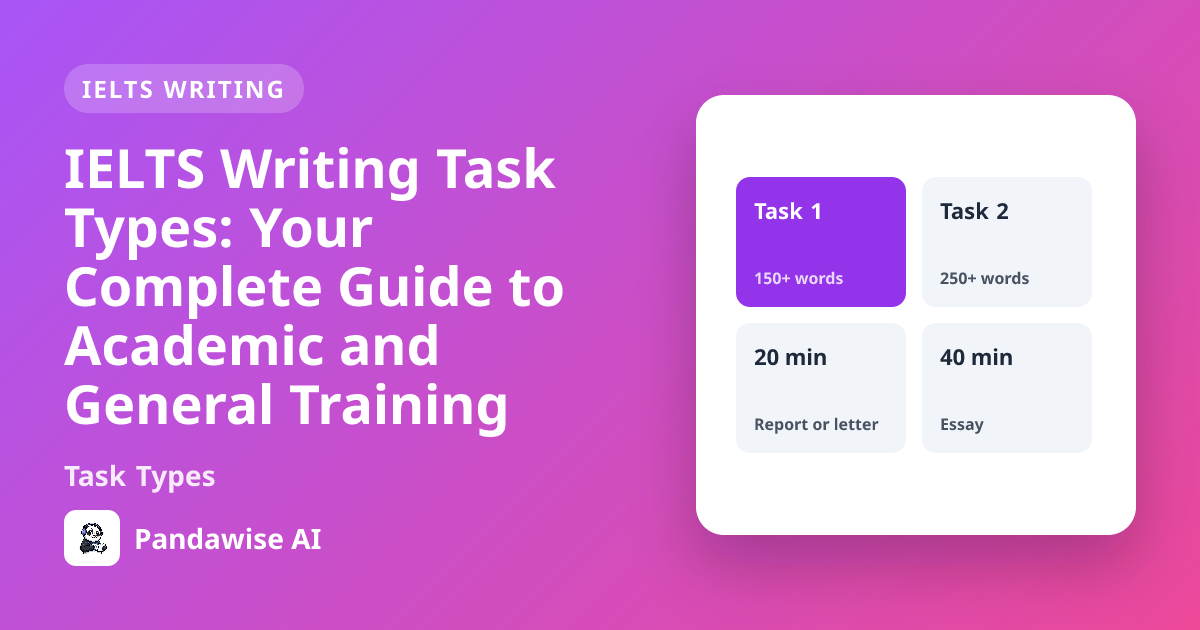
You have 60 minutes for the whole Writing test. Task 1 needs at least 150 words, and you should spend about 20 minutes on it. Task 2 is longer – at least 250 words – and counts twice as much as Task 1, so never steal time from it. Answers under the minimum word count lose marks.
Examiners mark your letter using four criteria, each worth 25% of your score:
- Task Achievement – how well you cover all three bullet points with a clear purpose and consistent tone.
- Coherence and Cohesion – how logically your ideas flow and how well you use paragraphs.
- Lexical Resource – the range and accuracy of your vocabulary, including natural informal expressions.
- Grammatical Range and Accuracy – the variety and correctness of your sentence structures.
For an informal letter, Task Achievement also depends on getting the tone right. A formal letter to a friend would sound unnatural and would limit your score.
A sample IELTS informal letter question
Here is a typical task exactly as it would appear on the exam paper.
You have recently moved to a new city to start a new job. Write a letter to your friend Sam. In your letter:
- explain why you moved
- describe your new neighbourhood
- invite Sam to visit you
As with all General Training letters, you do not write addresses or a date. Start with the salutation and end with a friendly sign-off.
How to plan and structure your IELTS informal letter
Spend the first three to four minutes planning. Read the bullet points carefully – they are your paragraph topics. Jot down two or three ideas for each one, and think of a few informal phrases you might use.
A clear structure makes your letter easy to follow and helps your Coherence and Cohesion score. Here is a paragraph-by-paragraph plan:
| Paragraph | Purpose | What to include |
|---|---|---|
| Salutation | Open the letter | Dear Sam, – always use the first name given in the prompt. |
| Opening paragraph | State the purpose and set a friendly tone | A warm opening line, then explain why you are writing. You can include a brief apology for not writing sooner or a general friendly remark. |
| Body paragraph 1 | Cover bullet point 1 | Explain why you moved. Give one or two specific, natural reasons. |
| Body paragraph 2 | Cover bullet point 2 | Describe your new neighbourhood. Mention a couple of concrete details – a park, a café, the atmosphere. |
| Body paragraph 3 | Cover bullet point 3 | Invite Sam to visit. Suggest a time or activity, and show enthusiasm. |
| Closing | End warmly | A sentence that looks forward to hearing from Sam, then a sign-off like Best wishes, or Love, followed by your first name. |
Notice that each bullet point gets its own paragraph. This makes it obvious to the examiner that you have covered everything.
Useful language for an IELTS informal letter
An informal letter should sound like natural, friendly speech. Use contractions (I’ve, you’ll, it’s), phrasal verbs (catch up, settle in, look around) and the occasional idiom if it fits naturally. Avoid very formal linking words like furthermore or consequently; instead, use simple connectors like anyway, so, by the way.
Here is a table of language you can adapt, not memorise as a template.
| Function | Useful phrases |
|---|---|
| Opening | It was great to hear from you. / Sorry I haven’t written for ages – I’ve been rushed off my feet. / I thought I’d drop you a line to tell you about… |
| Explaining reasons | The main reason is that… / I’d been wanting to… for ages, so when the chance came up, I jumped at it. / To be honest, I needed a change. |
| Describing a place | It’s a really lively area with loads of… / There’s a lovely park just round the corner where I… / The best thing about it is… |
| Making an invitation | You must come and stay – I’ve got a spare room. / Why don’t you come over for a weekend? / I’d love to show you around. |
| Closing | Well, that’s all for now. / Drop me a line when you’re free. / Can’t wait to catch up properly. |
| Sign-offs | Best wishes, / Love, / Take care, followed by your first name |
High-scoring IELTS informal letter model answer
Here is a model answer to the sample question above. It covers all three bullet points, uses a natural informal tone and is between 160 and 190 words.
Dear Sam,
It was lovely to get your email last week – sorry I’ve taken so long to reply. Things have been a bit mad since I moved, but I’m finally starting to feel settled.
You probably remember I’d been going on about wanting a change for ages. Well, I was offered a job here as a graphic designer at a small agency, and I just couldn’t turn it down. The work is really interesting, and honestly, I was ready for a fresh start.
The neighbourhood I’ve moved to is brilliant. It’s got a really friendly vibe, and there are loads of independent cafés and little shops just down the road. There’s also a huge park five minutes away where I’ve been going for runs most mornings – it’s the perfect way to clear my head before work.
You’d love it here, so why don’t you come and visit? I’ve got a spare room, so you can stay for a weekend. We could check out some of the local restaurants and maybe do a bit of sightseeing. Let me know when you’re free – I’d be chuffed to see you.
Anyway, drop me a line when you get a chance. Can’t wait to catch up properly!
Best wishes, Jo
Word count: 190
Why the model answer works
Task Achievement
The letter opens with a warm, personal sentence and clearly states the purpose. Each of the three bullet points gets a full paragraph with specific details – the job offer, the cafés and park, and a concrete invitation with a suggested activity. The tone is consistently informal throughout.
Coherence and Cohesion
Paragraphs are logically ordered and each one develops a single idea. Simple linking words like well, also and anyway keep the flow natural. The letter is easy to follow without any forced or overused connectors.
Lexical Resource
The vocabulary is natural and varied: a bit mad, going on about, couldn’t turn it down, friendly vibe, check out, chuffed. These expressions show a good range of informal lexis without sounding unnatural or memorised.
Grammatical Range and Accuracy
There is a mix of simple and complex sentences, including relative clauses (where I’ve been going for runs), conditional forms (why don’t you come) and a range of tenses. Contractions are used throughout, and there are no errors.
Common mistakes that lower the band
- Using a formal tone – Writing
I am writing to inform youorI look forward to hearing from youto a friend sounds unnatural and limits your Task Achievement score. - Missing a bullet point – If you do not fully cover all three points, Task Achievement cannot go above Band 5.
- Inventing addresses or dates – The instructions say to start with
Dear…and end with a sign-off. Adding extra elements wastes time and does not earn marks. - Overusing idioms – One or two natural idioms are fine, but cramming in too many makes your writing sound forced and can confuse the reader.
- Writing a very short letter – If you write fewer than 150 words, you lose marks. Aim for 160–190 words to develop each point properly.
- Ignoring paragraphing – A single block of text hurts Coherence and Cohesion. Use a new paragraph for each bullet point.
How to practise and key takeaways
Regular practice with realistic tasks is the most effective way to improve. Write letters under timed conditions, then check that you have covered all three bullet points with a consistently informal tone. If you want focused feedback, you can try IELTS Writing lessons on Pandawise AI to see where you can improve.
Key takeaways:
- An IELTS General Training letter to a friend must use a warm, conversational tone with contractions and natural phrasing.
- Follow the informal letter format IELTS examiners expect: salutation, short opening, one paragraph per bullet point, friendly closing.
- Spend three to four minutes planning so each paragraph has a clear purpose.
- Study an IELTS informal letter model answer to see how tone, structure and vocabulary work together.
- Practise writing within the 20‑minute limit and always count your words.
- Use simple, natural linking rather than formal connectors to keep the letter flowing.
For more on the other letter types, see our guides on IELTS General Training Writing Task 1 semi-formal letters and IELTS General Training Writing Task 1 formal letters. You can also explore all IELTS Writing task types to understand how Task 1 and Task 2 fit together.
Write it and get feedback on every criterion
Exam-style writing tasks marked by an AI examiner on all four criteria, with a band for each.
Explore the appFrequently asked questions
How do I start an IELTS informal letter?
Start with 'Dear' followed by the first name given in the prompt, such as 'Dear Sam,'. Then write a short opening paragraph that sets a friendly tone and explains why you are writing. You can include a brief apology for not writing sooner or a warm remark about hearing from them. Do not include addresses or a date.
Can I use contractions in an IELTS informal letter?
Yes, contractions like 'I've', 'you'll' and 'it's' are expected in an informal letter. They make your writing sound natural and conversational, which is exactly what the examiner looks for. Avoid full forms like 'I have' or 'you will' because they can make the tone too formal for a letter to a friend.
What is the best sign-off for an IELTS informal letter?
Use a friendly sign-off such as 'Best wishes,' 'Love,' or 'Take care,' followed by your first name. The choice depends on how close you are to the recipient. 'Love' is fine for a very close friend or family member, while 'Best wishes' is safe for any informal letter. Avoid formal closings like 'Yours sincerely'.
How many paragraphs should an IELTS informal letter have?
A well-structured informal letter usually has four or five short paragraphs: a salutation, an opening paragraph that states the purpose, one paragraph for each of the three bullet points, and a closing sentence with a sign-off. This makes it easy for the examiner to see that you have covered all the required points.
What happens if I write more than 150 words in an IELTS informal letter?
Writing more than 150 words is fine as long as you stay on topic and manage your time well. Aim for 160 to 190 words to develop each bullet point fully without rushing. However, do not write a very long letter because you need the remaining time for Task 2, which counts for twice as much of your Writing score.