Task Types
IELTS Semi-Formal Letter: Structure, Language and Model Answer
Learn how to write a high-scoring IELTS semi-formal letter for General Training Task 1. This guide covers structure, polite language, and a model answer to a neighbour or landlord.
Pandawise AI · Updated · 9 min read
In this guide
Writing a letter to someone you know but not well—such as a neighbour, landlord, or colleague—can feel tricky. You need to be polite and clear, but not overly formal or too casual. This is exactly what an IELTS semi-formal letter tests. In IELTS General Training Writing Task 1, you may be asked to write a semi formal letter IELTS General Training candidates often find challenging because the tone must sit between friendly and strictly official. This guide will show you how to get that balance right. You will learn what the task involves, see a realistic sample question, and follow a clear paragraph-by-paragraph plan. You will also find useful phrases, a high-scoring model answer, and practical tips to avoid common mistakes. By the end, you will feel confident writing a letter to a neighbour or landlord IELTS style, or any other semi-formal situation.
What Is an IELTS Semi-Formal Letter?
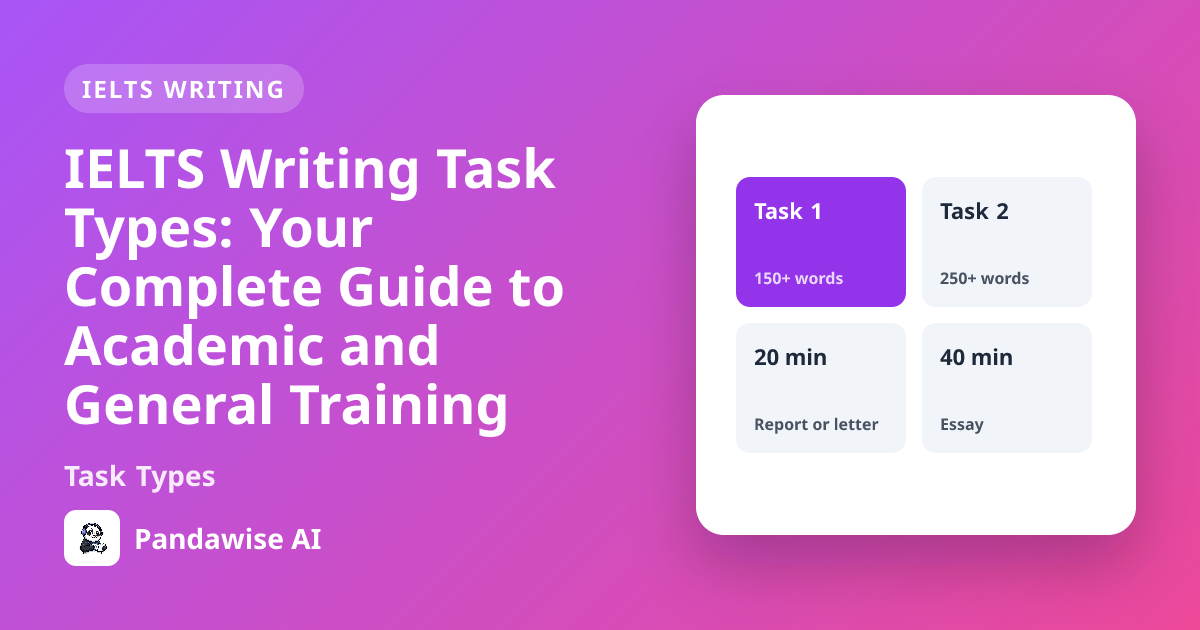
An IELTS semi-formal letter appears only in the General Training version of the Writing test. The whole Writing paper lasts 60 minutes and has two tasks. Task 1 asks you to write at least 150 words in about 20 minutes. Task 2 is an essay of at least 250 words, which you should spend around 40 minutes on. Remember that Task 2 counts twice as much as Task 1 towards your Writing band score. Answers that fall below the minimum word count will lose marks.
In General Training Task 1, you are given a situation and three bullet points you must cover. The tone depends on who you are writing to:
- Informal: a close friend (use first names, casual language)
- Semi-formal: someone you know but not well—a neighbour, landlord, colleague, or teacher (use a polite, friendly tone)
- Formal: a company or official you do not know (use very polite, impersonal language)
A semi-formal letter sits in the middle. You are not writing to a stranger, so you can use some everyday expressions, but you still need to show respect. The opening is usually ‘Dear Mr Brown,’ or ‘Dear Ms Lee,’ and you close with ‘Kind regards,’ or ‘Best regards,’ followed by your full name. The language is polite and clear: you should avoid slang and use only a few contractions.
The examiner marks your letter using four criteria, each worth 25% of the score:
- Task Achievement: how well you cover the three bullet points and set the right tone
- Coherence and Cohesion: how logically your ideas flow and how well you use paragraphs and linking words
- Lexical Resource: your range and accuracy of vocabulary
- Grammatical Range and Accuracy: your use of sentence structures and grammar
Understanding these criteria will help you write a letter that meets the examiner’s expectations.
Sample IELTS Semi-Formal Letter Question
Here is a typical task exactly as you would see it on the exam paper. This example involves a letter to a neighbour or landlord IELTS candidates often practise.
You should spend about 20 minutes on this task.
You live in a rented apartment. You have noticed that the garden gate is broken and needs repair.
Write a letter to your landlord, Mrs Taylor. In your letter:
- explain what has happened to the gate
- say why this is a problem for you
- suggest what you would like her to do
Write at least 150 words.
You do not need to write any addresses.
Begin your letter as follows:
Dear Mrs Taylor,
This task is semi-formal because you know your landlord’s name and have some relationship with her, but it is a business-like connection. You need to be polite and clear without being overly friendly or distant.
How to Plan and Structure Your Answer
Before you write, spend three to four minutes planning. This will help you cover all the bullet points, keep the right tone, and organise your ideas. Follow these steps:
- Read the situation and bullet points carefully. Identify the recipient and the tone you need.
- Brainstorm ideas for each bullet point. Jot down a few words or phrases for each one.
- Decide on a paragraph structure. A clear four-paragraph plan works well for most semi-formal letters.
Here is a paragraph-by-paragraph plan you can adapt:
| Paragraph | Purpose | What to Include |
|---|---|---|
| Paragraph 1 | State the purpose | Say why you are writing, using a polite opening sentence. Mention the main topic (e.g., the broken gate). |
| Paragraph 2 | Cover bullet point 1 | Explain what has happened to the gate. Give a few clear details. |
| Paragraph 3 | Cover bullet points 2 and 3 | Explain why this is a problem for you, then politely suggest what you would like the landlord to do. |
| Paragraph 4 | Close the letter | Thank the landlord, mention you look forward to hearing from them, and end with a suitable closing phrase. |
This structure ensures you address every bullet point in a logical order. It also helps you avoid mixing up ideas, which can hurt your Coherence and Cohesion score.
Useful Language for an IELTS Semi-Formal Letter
The key to a high Lexical Resource score is using a range of appropriate words and phrases naturally. Do not memorise whole sentences as templates; examiners penalise template-heavy writing. Instead, learn flexible phrases you can adapt to different situations.
Opening and Stating the Purpose
- I am writing to let you know about a small issue with…
- I wanted to bring something to your attention regarding…
- I hope you are well. I am getting in touch about…
Explaining a Situation
- Earlier this week, I noticed that…
- It appears that… has become…
- Unfortunately, … is no longer…
Describing a Problem
- This is causing some inconvenience because…
- The main concern is that…
- I am a little worried about… as it could lead to…
Making a Polite Suggestion or Request
- I was wondering if you could possibly…
- Would it be possible for you to…?
- I would be very grateful if you could look into this.
Closing the Letter
- Thank you very much for your attention to this matter.
- I look forward to hearing from you soon.
- Please let me know if you need any further information.
Sign-offs
- Kind regards,
- Best regards,
Notice how these phrases are polite but not stiff. They use a friendly, respectful tone that suits a semi-formal relationship. Avoid very formal phrases like ‘I am writing to express my dissatisfaction’ or informal ones like ‘Can you fix it ASAP?’.
High-Scoring Model Answer
Here is a model answer to the sample question above. It follows the four-paragraph plan, uses appropriate language, and is between 160 and 190 words.
Dear Mrs Taylor,
I hope you are well. I am writing to let you know about a problem with the garden gate at the apartment.
Earlier this week, I noticed that the wooden gate leading to the back garden has come away from its hinges. It looks as though some of the screws have rusted and snapped, so the gate now hangs at an angle and cannot be closed properly.
This is causing me some concern for two reasons. Firstly, I often keep my bicycle in the back garden, and with the gate broken, it is no longer secure. Secondly, the gate bangs loudly whenever it is windy, which is quite disruptive, especially at night. I was wondering if you could possibly arrange for someone to repair it. Perhaps a local handyman could replace the hinges and secure the gate again.
Thank you very much for your attention to this matter. I look forward to hearing from you soon.
Kind regards, John Smith
Word count: 174
Why the Model Answer Works
Let us examine the model answer against the four marking criteria.
Task Achievement The letter fully covers all three bullet points. It explains what happened (the gate came off its hinges), why it is a problem (security and noise), and suggests a solution (arrange a repair). The tone is consistently semi-formal: polite and friendly, using the landlord’s name and a suitable sign-off.
Coherence and Cohesion The letter has a clear four-paragraph structure. Each paragraph has a distinct purpose, and ideas flow logically from the problem to its effects and then to a request. Linking words like ‘firstly’, ‘secondly’, and ‘so’ are used naturally, not overused.
Lexical Resource The vocabulary is precise and varied without being overly complex. Phrases like ‘come away from its hinges’, ‘rust and snapped’, ‘no longer secure’, and ‘quite disruptive’ show a good range. The writer avoids slang and inappropriate formal words.
Grammatical Range and Accuracy The letter uses a mix of simple and complex sentences. For example, ‘It looks as though some of the screws have rusted and snapped, so the gate now hangs at an angle and cannot be closed properly’ combines clauses effectively. There are no grammatical errors, and punctuation is correct.
Common Mistakes That Lower the Band
Avoid these frequent errors to protect your score.
- Using the wrong tone: Writing too casually (‘Hey, the gate’s busted’) or too formally (‘I wish to lodge a complaint’) will limit your Task Achievement band. Always match the tone to your relationship with the recipient.
- Missing a bullet point: Each bullet point must be clearly covered. If you forget to explain why the gate is a problem, for example, you cannot score higher than Band 5 for Task Achievement.
- Writing a disorganised letter: Jumping between ideas without clear paragraphs confuses the reader and lowers your Coherence and Cohesion score. Stick to a logical plan.
- Overusing linking words: Starting every sentence with ‘Firstly’, ‘Moreover’, or ‘Nevertheless’ sounds unnatural and mechanical. Use linking words where they help, but let your ideas flow naturally.
- Using memorised phrases: Examiners are trained to spot template language. A letter that begins ‘I am writing to express my deep concern regarding the aforementioned issue’ will not impress. Write naturally for the specific situation.
- Ignoring the word count: A letter under 150 words will lose marks. Aim for 160–190 words to be safe, but do not write much more than 200 words, as you need time for Task 2.
How to Practise and Key Takeaways
Regular, focused practice is the best way to improve. Start by writing letters for different semi-formal situations: a note to a colleague about a meeting, a message to a teacher about an assignment, or a letter to a neighbour or landlord IELTS style. After writing each letter, check it against the four criteria. Ask yourself:
- Did I cover all three bullet points?
- Is the tone consistently polite and friendly?
- Are my ideas in clear paragraphs?
- Did I use a range of vocabulary and grammar accurately?
You can also use tools like IELTS Writing lessons on Pandawise AI to get instant feedback on your letters. This can help you spot weaknesses and improve faster.
Key takeaways
- An IELTS semi-formal letter is for someone you know but not well; use a polite, friendly tone with ‘Dear Mr/Ms …’ and ‘Kind regards’.
- Spend 3–4 minutes planning a clear four-paragraph structure that covers all bullet points.
- Use natural, flexible phrases rather than memorised templates.
- Keep your letter between 160 and 190 words to fully develop your ideas without wasting time.
- Always leave a minute or two to check for tone, grammar, and spelling errors.
If you want to explore other letter types, read our guides on IELTS General Training Writing Task 1 informal letters and IELTS General Training Writing Task 1 formal letters (complaint, request, application). For a complete overview of every Writing task, see all IELTS Writing task types: Academic Task 1 visuals, General Training letters and Task 2 essays, with how to approach each.
Write it and get feedback on every criterion
Exam-style writing tasks marked by an AI examiner on all four criteria, with a band for each.
Explore the appFrequently asked questions
What is the difference between a semi-formal and a formal letter in IELTS General Training?
A semi-formal letter is for someone you know but not well, like a neighbour or landlord. You use polite, friendly language with their surname and ‘Kind regards’. A formal letter is for a company or official you do not know. It uses more impersonal language, often with ‘Dear Sir/Madam’ and ‘Yours faithfully’.
Can I use contractions in an IELTS semi-formal letter?
You can use a few contractions, like ‘I’m’ or ‘it’s’, to sound natural, but do not overuse them. The tone should remain polite and clear. Avoid very casual contractions like ‘gonna’ or ‘wanna’, which are too informal for this style.
How many words should an IELTS semi-formal letter have?
You must write at least 150 words. Aim for 160 to 190 words to fully cover the bullet points without writing too much. Writing fewer than 150 words will lose you marks, and writing much more may leave you short of time for Task 2.
What happens if I write an informal letter instead of a semi-formal one?
Your Task Achievement score will be limited because the tone does not match the situation. The examiner expects a polite, friendly style for a semi-formal letter. Using casual language like ‘Hey’ or slang will show you did not understand the task correctly.
How should I start and end an IELTS semi-formal letter?
Start with ‘Dear Mr Brown,’ or ‘Dear Ms Lee,’ using the person’s surname. End with ‘Kind regards,’ or ‘Best regards,’ followed by your full name. This shows respect while keeping a friendly tone appropriate for someone you know but not well.