Question Types
IELTS Reading Matching Sentence Endings: Tips, Example and Traps
Learn how to answer IELTS Reading matching sentence endings questions. Discover a clear strategy, see a worked example and avoid the most common mistakes.
Pandawise AI · Updated · 11 min read
In this guide
- 1What Are IELTS Reading Matching Sentence Endings Questions?
- 2What the Questions Look Like: A Realistic Example
- 3Step-by-Step Strategy for Matching Sentence Endings Tips
- 4Worked Example: Answers Explained
- 5Common Mistakes and Traps in Matching Sentence Endings
- 6How to Practise Matching Sentence Endings Effectively
- 7Key Takeaways
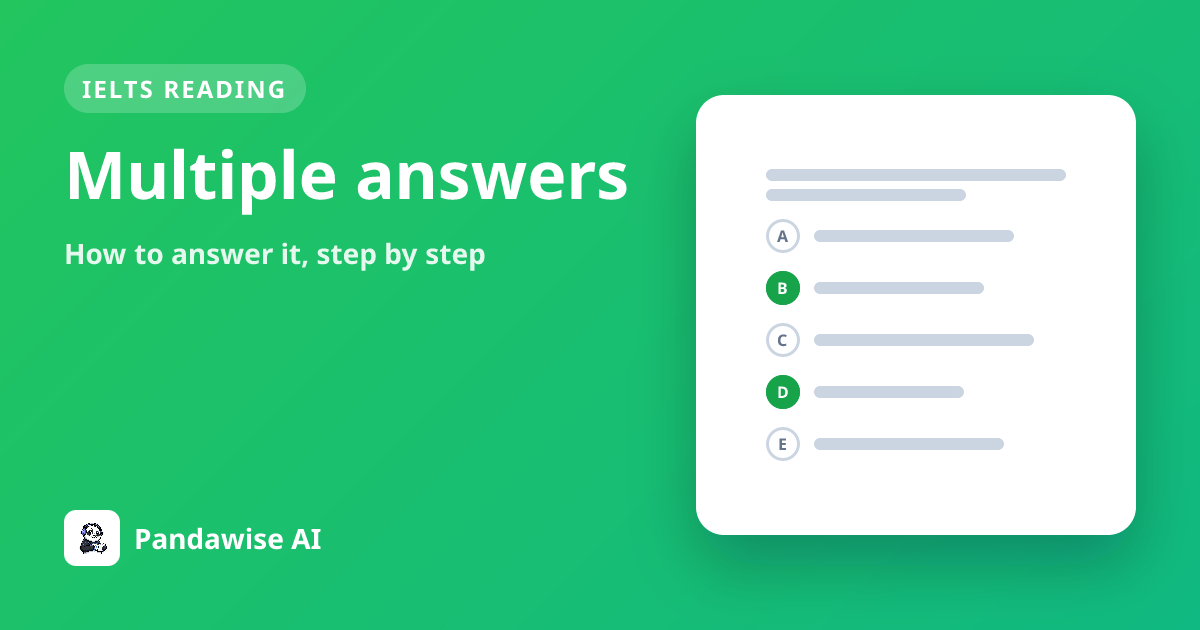
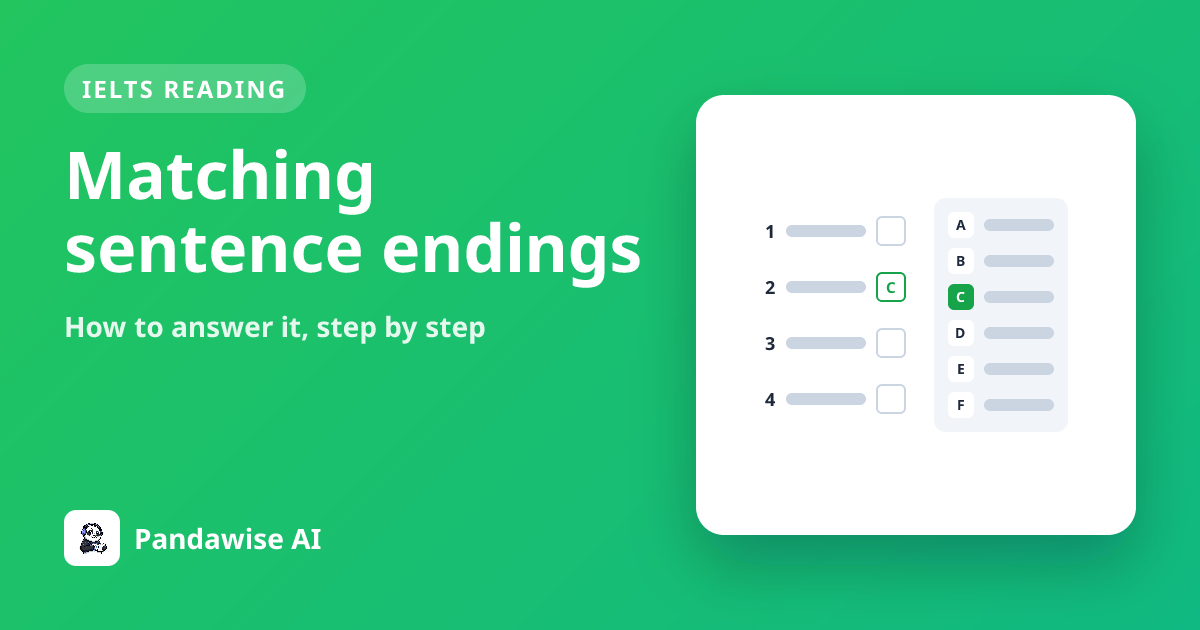
IELTS Reading matching sentence endings questions ask you to complete sentence beginnings with the correct endings from a list. You will see several incomplete sentences (numbered) and a box of possible endings (labelled A, B, C and so on). There are always more endings than beginnings, so some options will not be used. The completed sentence must match the information in the passage and be grammatically correct. This question type tests your ability to understand the main ideas and details of a text, as well as your awareness of paraphrase and sentence structure.
These questions often appear in both Academic and General Training Reading. In Academic Reading, you might find them in any of the three long passages, which become progressively harder. In General Training Reading, they usually appear in Section 3, the longer, more complex text of general interest. The sentence beginnings always follow the order of the passage, which helps you locate the answers.
What Are IELTS Reading Matching Sentence Endings Questions?
In this task, you are given a set of sentence beginnings taken from the passage. Your job is to choose the correct ending from a list to complete each sentence. The endings are paraphrased from the text, so you need to recognise synonyms and different grammatical structures. Several endings may fit grammatically, but only one matches the meaning of the passage.
Here is exactly how the instructions appear on the question paper, in bold:
Complete each sentence with the correct ending, A–F, below.
Write the correct letter, A–F, in boxes 1–4 on your answer sheet.
Below the instructions, you will see the sentence beginnings numbered 1–4 and the endings labelled A–F. There are more endings than beginnings, so you will not use two of them.
What the Questions Look Like: A Realistic Example
Let us look at a short passage and a set of matching sentence endings questions based on it. The passage is about the history of papermaking.
The Origins of Paper
A. Before the invention of paper, people wrote on a variety of materials such as stone, clay, wood and silk. These surfaces were often heavy, expensive or difficult to prepare. The need for a lighter, cheaper and more practical writing material led to experiments with plant fibres.
B. The first true paper is believed to have been produced in China around 105 AD by a court official named Cai Lun. He mixed mulberry bark, hemp and rags with water, mashed the mixture into a pulp, then pressed it flat and let it dry in the sun. This basic technique remained largely unchanged for centuries.
C. Papermaking knowledge slowly spread from China to the Islamic world and then to Europe. By the 12th century, paper mills had been established in Spain, and the craft gradually moved northwards. The introduction of the printing press in the 15th century dramatically increased the demand for paper, encouraging further innovation.
D. The 19th century brought a major breakthrough: the development of paper made from wood pulp. This was much cheaper than rag-based paper and allowed mass production. However, early wood-pulp paper contained acids that caused it to yellow and become brittle over time, a problem that modern alkaline papers have largely solved.
Now, here are the matching sentence endings questions based on the passage:
Complete each sentence with the correct ending, A–F, below.
Write the correct letter, A–F, in boxes 1–4 on your answer sheet.
- Before paper existed, writing materials were often
- Cai Lun’s method of papermaking
- The arrival of the printing press
- The switch to wood pulp in the 19th century
A. involved a process that stayed almost the same for many years. B. resulted in paper that deteriorated quickly because of its chemical content. C. led to a greater need for paper and new ways of making it. D. unsuitable because of their weight, cost or complexity. E. was first discovered in Spain during the 12th century. F. was made from a combination of silk and clay.
Step-by-Step Strategy for Matching Sentence Endings Tips
Follow this strategy to answer matching sentence endings questions efficiently and accurately. It will help you manage your time and avoid common traps.
1. Read the instructions carefully
Check how many sentence beginnings there are and how many endings. Remember there are more endings than beginnings. Note that you must write a letter (A, B, C…) on the answer sheet, not the words.
2. Read the sentence beginnings first
Do not look at the endings yet. Read only the numbered sentence beginnings. Underline the key words in each one. Think about what type of information is needed to complete the sentence grammatically: a noun phrase, a verb phrase, a reason, a result, etc. This prepares your brain to search for the right meaning.
3. Locate the first sentence beginning in the passage
The sentence beginnings follow the order of the passage. Find the part of the text that talks about the idea in the first beginning. Remember, the words will probably be paraphrased, so look for synonyms.
4. Read that section of the passage carefully
Once you find the right place, read the surrounding sentences to understand the full meaning. Decide what the passage says about that topic. Try to complete the sentence in your own words before looking at the list of endings.
5. Scan the list of endings for a match
Now look at endings A–F. Find the one that matches your predicted meaning. Check that it also fits grammatically with the beginning. Be careful: several endings may seem grammatically possible, but only one will be correct according to the passage.
6. Repeat for the remaining beginnings
Move to the next sentence beginning and repeat steps 3–5. Because the answers appear in order, you will move forward through the passage. This saves time because you do not need to search the whole text for each question.
7. Eliminate used endings
As you choose an ending, cross it out lightly in pencil on the question paper. This makes it easier to see which options remain. However, do not assume an ending is wrong just because you have used it once; in this question type, each ending is used only once, but always double-check.
8. Guess if you are unsure
Never leave a blank on the answer sheet. There is no penalty for a wrong answer. If you are running out of time, make an educated guess from the endings that are left.
Time management tip
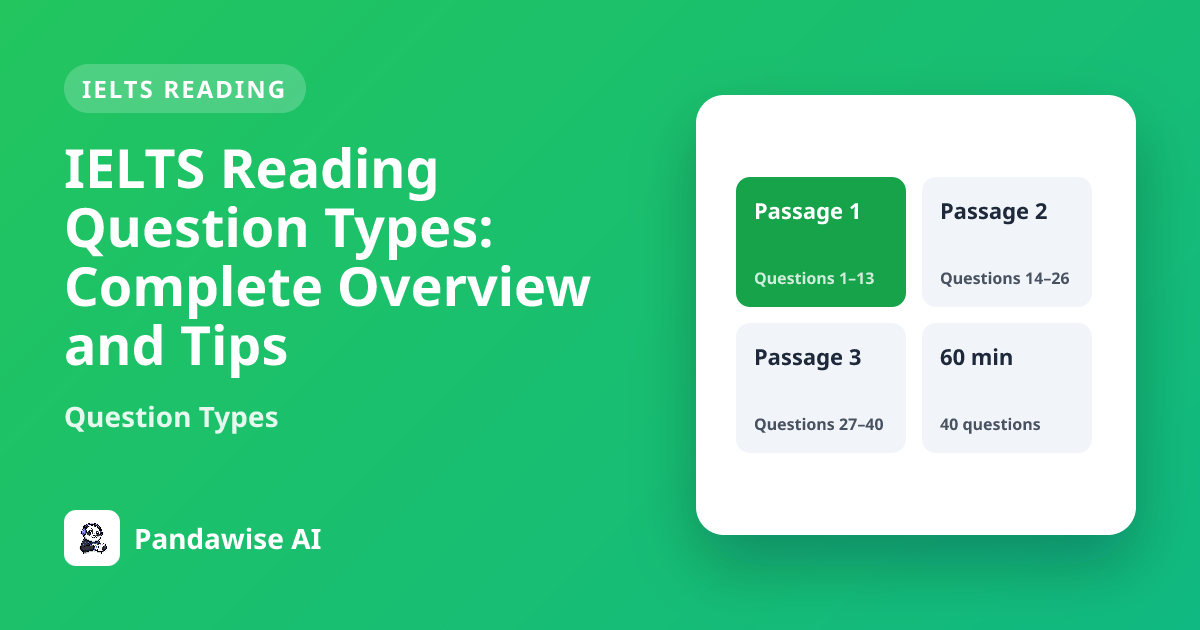
Aim to spend about 20 minutes on each passage. For matching sentence endings, allocate roughly 5–7 minutes. If you get stuck on one question, move on and come back to it later. Remember, you have 60 minutes for 40 questions, and you must transfer your answers directly onto the answer sheet within that time—there is no extra transfer time.
Worked Example: Answers Explained
Let us apply the strategy to the example above. I will show you the exact evidence from the passage and explain why the correct answer is right and why the tempting wrong option is wrong.
Question 1: Before paper existed, writing materials were often
- Location in passage: Paragraph A, sentence 1: “Before the invention of paper, people wrote on a variety of materials such as stone, clay, wood and silk. These surfaces were often heavy, expensive or difficult to prepare.”
- Paraphrase: “Before paper existed” = “Before the invention of paper”; “writing materials” = “materials” / “surfaces”; “were often” = “were often”.
- Correct answer: D – “unsuitable because of their weight, cost or complexity.” “Unsuitable” summarises “heavy, expensive or difficult to prepare”; “weight” = “heavy”; “cost” = “expensive”; “complexity” = “difficult to prepare”.
- Why the wrong option is tempting: Option F (“was made from a combination of silk and clay”) mentions materials from the passage, but the passage says people wrote on silk and clay; it does not say paper was made from them. Also, grammatically, F does not fit: “writing materials were often was made…” is incorrect.
Question 2: Cai Lun’s method of papermaking
- Location in passage: Paragraph B, last sentence: “This basic technique remained largely unchanged for centuries.”
- Paraphrase: “Cai Lun’s method” = “This basic technique”; “remained largely unchanged for centuries” = “stayed almost the same for many years”.
- Correct answer: A – “involved a process that stayed almost the same for many years.” This directly matches the meaning and grammar.
- Why the wrong option is tempting: Option E (“was first discovered in Spain during the 12th century”) refers to papermaking spreading to Spain, but the passage says the first paper was made in China, not discovered in Spain. Also, the sentence beginning is about Cai Lun’s method, not the location of discovery.
Question 3: The arrival of the printing press
- Location in passage: Paragraph C, last sentence: “The introduction of the printing press in the 15th century dramatically increased the demand for paper, encouraging further innovation.”
- Paraphrase: “The arrival” = “The introduction”; “increased the demand” = “a greater need”; “encouraging further innovation” = “new ways of making it”.
- Correct answer: C – “led to a greater need for paper and new ways of making it.” This is a clear paraphrase.
- Why the wrong option is tempting: Option B mentions paper deteriorating, but that is related to 19th-century wood-pulp paper, not the printing press. The printing press increased demand; it did not cause deterioration.
Question 4: The switch to wood pulp in the 19th century
- Location in passage: Paragraph D, sentences 2 and 3: “This was much cheaper than rag-based paper and allowed mass production. However, early wood-pulp paper contained acids that caused it to yellow and become brittle over time…”
- Paraphrase: “The switch to wood pulp” = “the development of paper made from wood pulp”; “contained acids that caused it to yellow and become brittle” = “deteriorated quickly because of its chemical content”.
- Correct answer: B – “resulted in paper that deteriorated quickly because of its chemical content.” “Deteriorated quickly” matches “yellow and become brittle over time”; “chemical content” matches “acids”.
- Why the wrong option is tempting: Option A mentions a process staying the same, but that refers to Cai Lun’s method, not the 19th-century switch. The wood-pulp process was a major change, not an unchanged method.
Common Mistakes and Traps in Matching Sentence Endings
Watch out for these common pitfalls when you answer matching sentence endings questions.
- Focusing only on grammar: Several endings may fit grammatically. Do not choose an ending just because it makes a correct sentence. Always check the meaning against the passage.
- Matching words, not meaning: The test writers use paraphrases. If you see the same words in the ending as in the passage, be cautious. The correct ending often uses synonyms, while the distractor may use the exact words from the text but change the meaning.
- Ignoring the passage order: The sentence beginnings follow the order of information in the passage. If you find the answer to question 2, the answer to question 1 must come before that point in the text. Use this to locate answers more quickly.
- Not reading around the target sentence: The answer may depend on the sentence before or after the one containing the key words. Always read the surrounding context to understand the full idea.
- Using an ending more than once: Each ending can be used only once. If you have used an ending, cross it out. However, do not assume your first answer is correct; if a later question seems to need the same ending, double-check both.
- Leaving blanks: There is no penalty for wrong answers. If you cannot find an answer, guess. You have a chance of getting it right, and you lose nothing if you are wrong.
- Spending too long on one question: If you are stuck, move on. You can come back if you have time at the end. Losing time on one question can cost you easier marks later.
How to Practise Matching Sentence Endings Effectively
Regular, focused practice is the key to improving. Here are some practical exercises you can do.
- Create your own paraphrases: Take a sentence from a news article or a short text. Write three different ways to express the same idea. Then, turn the original sentence into a sentence beginning and your paraphrases into possible endings. This builds your skill in recognising synonyms.
- Practise with a timer: Use a sample passage and set a stopwatch for 7 minutes. Complete only the matching sentence endings questions. This helps you get used to the time pressure.
- Analyse your mistakes: After you finish a practice set, do not just check the answers. For each wrong answer, write down why the correct ending is right and why the one you chose is wrong. Look for the paraphrase you missed.
- Work backwards: Read the endings first, then scan the passage for the ideas. This is not the recommended strategy for the exam, but as a practice exercise it trains you to spot paraphrases quickly.
- Use Pandawise AI for targeted feedback: On Pandawise, you can practise matching sentence endings questions and get instant, detailed explanations for every answer. The platform highlights the exact evidence in the passage and shows you the paraphrase, helping you understand your errors. Try the IELTS Reading lessons to build your skills.
For more help with other question types, explore these guides:
- all IELTS Reading question types: an overview of the test and of each type, with how to approach it
- IELTS Reading sentence completion questions
- IELTS Reading summary completion questions (words from the passage)
Key Takeaways
- Sentence beginnings follow the order of the passage, so use this to locate answers efficiently.
- Always check both meaning and grammar; several endings may fit grammatically but only one will be correct according to the text.
- Paraphrase is central: look for synonyms and different sentence structures, not the same words.
- Eliminate used endings as you go, but be ready to reconsider if a later question suggests a conflict.
- Never leave a blank; there is no penalty for guessing.
- Practise with timed exercises and analyse your errors to improve your ability to spot paraphrases.
Practise matching sentence endings questions
Exam-style passages and practice tests with instant marking and the evidence for every answer.
Explore the appFrequently asked questions
How many endings are there in IELTS Reading matching sentence endings?
There are always more endings than sentence beginnings. Typically, you will have 4 or 5 sentence beginnings and 6 or 7 possible endings labelled A, B, C, etc. This means you will not use two or three of the endings. The extra options act as distractors.
Do the sentence beginnings follow the order of the passage?
Yes, the sentence beginnings are in the same order as the information in the passage. This makes it easier to locate the answers because you can move through the text from beginning to end. The endings in the box, however, are not in passage order.
Can I use the same ending for more than one sentence?
No. In matching sentence endings questions, each ending can be used only once. If you try to use an ending more than once, one of your answers will be wrong. Always cross out the endings you have used to avoid confusion.
What should I do if more than one ending seems to fit grammatically?
Check the meaning carefully against the passage. The test often includes endings that are grammatically possible but factually incorrect according to the text. Only the ending that matches both the grammar and the meaning of the passage is correct. Always verify your choice with the evidence in the passage.
How much time should I spend on matching sentence endings questions?
Aim to spend about 5 to 7 minutes on a set of matching sentence endings questions. This fits within the general guideline of 20 minutes per passage. If you get stuck on one question, move on and return to it later if you have time. Never leave a blank on the answer sheet.