Question Types
IELTS Reading Summary Completion with Word List: Tips and Sample
Summary completion with a word list asks you to choose the correct letter from a box of options. Learn a reliable strategy and avoid the most common traps.
Pandawise AI · Updated · 11 min read
In this guide
IELTS Reading summary completion with word list questions ask you to complete a summary of part of a passage by choosing the correct option from a box of words or phrases labelled A, B, C and so on. You write the letter on your answer sheet, not the word itself. The box always contains more options than gaps, and the options are usually synonyms or paraphrases of the passage rather than the exact words from the text. This question type is common in Academic Passage 3, but it can appear in any part of the test. In this guide, you will learn exactly how these questions work, how to approach them step by step, and how to avoid the traps that cost candidates marks.
What are IELTS Reading summary completion with word list questions?
A summary completion with word list question gives you a short summary of part of the passage. Some words in the summary have been removed and replaced with gaps. Below the summary, you see a box containing options labelled A, B, C, D, E, F and sometimes more. Your job is to choose the correct option for each gap and write the letter on your answer sheet.
The summary is not a copy of the original passage. It is a condensed and paraphrased version. That means the words around the gaps are often synonyms or rewordings of the passage. The options in the box are also paraphrases, not direct quotes from the text. This makes summary completion from a list more demanding than summary completion where you take words directly from the passage.
Because the options are already given to you, you do not need to worry about spelling. However, you do need to understand the meaning of each option and check it against the passage. Several options may fit grammatically into a gap, but only one will match the meaning of the passage.
This question type is often found in Academic Passage 3, which is the hardest of the three passages. In General Training Reading, it can appear in Section 3, where the text is longer and more complex. The question type is the same in both modules.
What the questions look like
The instructions for this question type are written in bold. They usually say something like:
Complete the summary using the list of words, A–F, below.
Write the correct letter, A–F, in boxes 1–4 on your answer sheet.
Here is a realistic example based on an original passage.
Passage extract
A The idea that cities can be designed to improve public health is not new. In the nineteenth century, urban planners began to install sewage systems and public parks in response to outbreaks of infectious disease. These interventions were based on a simple principle: when people live in cleaner, less crowded environments, they become healthier. Today, researchers are applying the same principle to a different set of health problems, including obesity, diabetes and mental illness.
B One area of interest is the relationship between urban design and physical activity. Studies have shown that people who live in neighbourhoods with well-maintained footpaths, safe crossings and nearby parks tend to walk more. This is not simply a matter of personal preference. When the built environment makes walking easy and pleasant, people do it without thinking. In contrast, neighbourhoods designed around cars often discourage even short trips on foot.
C Another factor is access to healthy food. In many cities, low-income areas have few supermarkets but many fast-food outlets and convenience stores. Residents of these areas may find it difficult to buy fresh fruit and vegetables, even if they want to. Some planners argue that changing the food environment, for example by encouraging grocery stores to open in underserved neighbourhoods, can have a measurable effect on diet-related diseases.
D Mental health is also influenced by urban design. Green spaces, such as parks and community gardens, have been linked to lower levels of stress and depression. Even small amounts of greenery, such as street trees, appear to make a difference. Researchers suggest that these benefits come from several sources: green spaces encourage physical activity, provide opportunities for social contact and offer a break from noise and traffic.
Questions 1–4
Complete the summary using the list of words, A–F, below.
Write the correct letter, A–F, in boxes 1–4 on your answer sheet.
Urban planners in the nineteenth century tried to improve health by building infrastructure such as 1 ______ and parks. Modern planners are now looking at how city design affects problems like obesity and 2 ______. Research shows that people walk more when their neighbourhood has good footpaths and safe 3 ______. Access to healthy food is another concern: some districts have many fast-food outlets but few 4 ______.
| A crossings | B supermarkets |
| C sewage systems | D gyms |
| E diabetes | F offices |
Step-by-step strategy for summary completion from a list
Follow this strategy to answer IELTS Reading summary completion with word list questions accurately and efficiently.
1. Read the instructions carefully
Check how many options are in the box and how many gaps you need to fill. The box always has more options than gaps, so some options will not be used. Also confirm that you need to write letters, not words. Writing the word instead of the letter will be marked wrong.
2. Read the summary first, not the passage
The summary gives you a condensed version of one part of the passage. Read it through once to understand the overall topic. The gaps will usually follow the order of the passage, so the summary can also help you locate the relevant section of the text.
3. Identify the part of the passage the summary covers
Look at the title and the first sentence of the summary. Find where that information appears in the passage. The summary may cover one paragraph or several paragraphs. In Academic Reading, the summary often relates to a specific section, not the whole passage.
4. Study the options in the box
Read all the options carefully. Think about their meaning and their grammatical form. Are they nouns, verbs, adjectives or phrases? This will help you eliminate options that cannot fit a gap grammatically. For example, if the gap follows an article like "a" or "an", the answer must be a singular countable noun.
5. Work gap by gap
For each gap, read the whole sentence, not just the words immediately before and after the gap. Predict what kind of word is needed: a cause, an effect, a place, a problem, a solution? Then look at the options and shortlist the ones that fit grammatically and logically. Finally, go back to the passage and check the meaning. The correct option will match the meaning of the passage, even though the words are different.
6. Use the passage to confirm your choice
Find the exact part of the passage that the summary sentence is paraphrasing. Read that part carefully. Ask yourself: does this option express the same idea? If two options both fit grammatically, only one will be supported by the passage. The other is a distractor.
7. Cross out options as you use them
Once you are confident an option is correct, cross it out lightly on the question paper. This reduces the number of options to consider for the remaining gaps. However, be careful: if you later realise an answer is wrong, you may need to reconsider an option you crossed out.
8. Manage your time
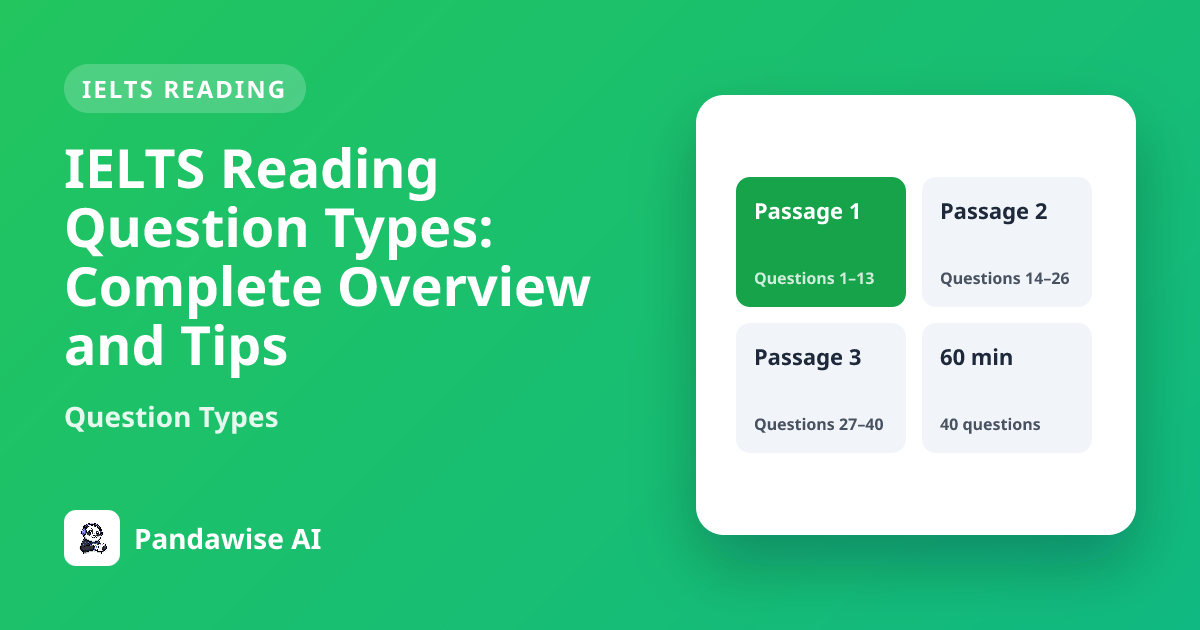
You have 60 minutes for 40 questions across three sections. That gives you about 20 minutes per section as a rule of thumb. Summary completion with a word list often appears in the hardest passage, so you may need to spend slightly more time on it. Do not spend more than two minutes on a single gap. If you are stuck, make your best guess and move on. There is no penalty for a wrong answer, so never leave a blank.
Worked example: answers explained
Let us go through the sample questions step by step.
Question 1
Urban planners in the nineteenth century tried to improve health by building infrastructure such as 1 ______ and parks.
The summary sentence is a paraphrase of paragraph A: "urban planners began to install sewage systems and public parks". The gap needs a noun that names something built by planners in the nineteenth century. The options that fit grammatically are A crossings, B supermarkets, C sewage systems, D gyms and F offices. The passage says "sewage systems and public parks", so the correct answer is C. The option "crossings" is tempting because it appears later in the passage, but it relates to modern neighbourhoods, not nineteenth-century infrastructure.
Question 2
Modern planners are now looking at how city design affects problems like obesity and 2 ______.
The summary sentence is a paraphrase of paragraph A: "Today, researchers are applying the same principle to a different set of health problems, including obesity, diabetes and mental illness." The gap needs a noun that names a health problem. The options that fit are B supermarkets, D gyms, E diabetes and F offices. Only "diabetes" is a health problem, so the correct answer is E. The option "gyms" is related to health but it is a place, not a problem.
Question 3
Research shows that people walk more when their neighbourhood has good footpaths and safe 3 ______.
The summary sentence is a paraphrase of paragraph B: "people who live in neighbourhoods with well-maintained footpaths, safe crossings and nearby parks tend to walk more." The gap needs a noun that names something safe in a neighbourhood. The options that fit grammatically are A crossings, B supermarkets, D gyms and F offices. The passage says "safe crossings", so the correct answer is A. The option "supermarkets" is tempting because it appears in the next paragraph, but it is not related to walking.
Question 4
Access to healthy food is another concern: some districts have many fast-food outlets but few 4 ______.
The summary sentence is a paraphrase of paragraph C: "low-income areas have few supermarkets but many fast-food outlets and convenience stores." The gap needs a noun that names a place where people can buy healthy food. The options that fit grammatically are B supermarkets, D gyms and F offices. The passage says "few supermarkets", so the correct answer is B. The option "gyms" is related to health but not to food.
Common mistakes and traps
Here are the most common traps in summary completion with a word box IELTS Reading questions.
- Choosing an option that fits grammatically but not logically. Several options may be the right part of speech, but only one will match the meaning of the passage. Always check the passage before deciding.
- Writing the word instead of the letter. The instructions say to write the letter. If you write the word, your answer is wrong even if the word is correct.
- Assuming the options are the same words as in the passage. The options are usually synonyms or paraphrases. Do not look for exact matches between the box and the passage.
- Using an option twice. Each option can be used only once. If you have already used a letter, cross it out.
- Ignoring the summary's order. The gaps usually follow the order of the passage. If your answers jump back and forth, you may be looking at the wrong part of the text.
- Relying on general knowledge. The correct answer must be supported by the passage, not by what you know about the topic. A distractor may be true in the real world but not mentioned in the text.
- Spending too long on one gap. If you cannot find the answer, move on and return later if time allows. There is no penalty for guessing.
How to practise summary completion from a list
The best way to improve at this question type is to practise with realistic passages and questions. Start by working through individual questions without a timer. Focus on understanding why each correct answer is correct and why each distractor is wrong. Then gradually add time pressure.
Here are some concrete exercises you can do.
- Paraphrase hunting. Take any short passage and write a four-sentence summary of it. Remove five key words and replace them with gaps. Then create a box of seven options, including two distractors. Ask a study partner to complete your summary. This forces you to think like the test writer.
- Synonym matching. For each option in a word box, write down two or three synonyms from the passage. This trains you to see the connection between the summary and the text.
- Grammar filtering. Look at a word box and decide which options are nouns, verbs, adjectives or phrases. Then look at each gap and decide what part of speech is needed. This quick filtering saves time in the real test.
- Timed practice. Take a full IELTS Reading section in 20 minutes. After finishing, review every summary completion question. Write down why you chose each answer and what evidence in the passage supports it.
You can also practise this question type with targeted feedback on IELTS Reading lessons.
If you want to understand how this question type fits into the whole test, read our guide to all IELTS Reading question types: an overview of the test and of each type, with how to approach it. You may also find it useful to compare this task with IELTS Reading summary completion questions (words from the passage), where you must write words rather than choose letters.
Key takeaways
- In IELTS Reading summary completion with word list questions, you choose the correct letter from a box of options, not the word itself.
- The box has more options than gaps, and the options are usually paraphrases of the passage.
- Read the summary first, identify the relevant part of the passage, then work gap by gap.
- Several options may fit grammatically, but only one will match the meaning of the passage.
- Write the letter, not the word, and cross out options as you use them.
- Never leave a blank: there is no penalty for a wrong answer.
Practise summary completion questions
Exam-style passages and practice tests with instant marking and the evidence for every answer.
Explore the appFrequently asked questions
Do I write the word or the letter in IELTS Reading summary completion with a word list?
You must write the letter, not the word. The instructions say to write the correct letter, for example A, B or C, in the box on your answer sheet. If you write the word, your answer will be marked wrong even if the word is correct.
Are the options in the word box the same as the words in the passage?
Usually not. The options are typically synonyms or paraphrases of the passage rather than the exact words from the text. You need to understand the meaning of each option and check it against the passage to find the correct match.
Can I use the same option twice in summary completion from a list?
No. Each option can be used only once. The box contains more options than gaps, so some options will not be used at all. Cross out each option as you use it to avoid confusion.
What should I do if two options both fit grammatically into a gap?
Go back to the passage and check the meaning. Only one option will match the idea in the passage. The other is a distractor designed to look plausible. Read the relevant part of the passage carefully and ask yourself which option expresses the same idea.
Where does summary completion with a word list usually appear in the IELTS Reading test?
This question type is often found in Academic Passage 3, which is the hardest of the three passages. In General Training Reading, it can appear in Section 3, where the text is longer and more complex. However, it can appear in any part of the test.